Have you ever walked away from a conversation wondering why it felt so flat or disconnected, even though nothing seemed wrong? We interact with people constantly, yet most of us never learned how people actually work.
In this free Captivate book summary, you’ll discover a science-backed system that helps you make stronger first impressions, read people accurately, and build real connections. Behavioral researcher Vanessa Van Edwards presents 14 practical social skills organized across 3 relationship phases, offering a complete framework to connect with people at every stage.
In essence, this summary will cover:
- How to Connect With People in Three Phases
- Part 1: Connecting with a Strong First Impression
- Part 2: Reading and Understanding People
- Part 3: Strengthening Connections
- Getting the Most from Captivate
- Captivate Chapters
- About the Author of Captivate
- Captivate Quotes
- Frequently Asked Questions
Let’s dive straight in!
How to Connect With People in Three Phases
In Captivate, Van Edwards translates psychology research into practical people skills and strategies. Her research shows that people with strong interpersonal intelligence (PQ) earn on average $29,000 more per year and report being 42% happier. The good news: PQ can be measured, practiced, and improved.
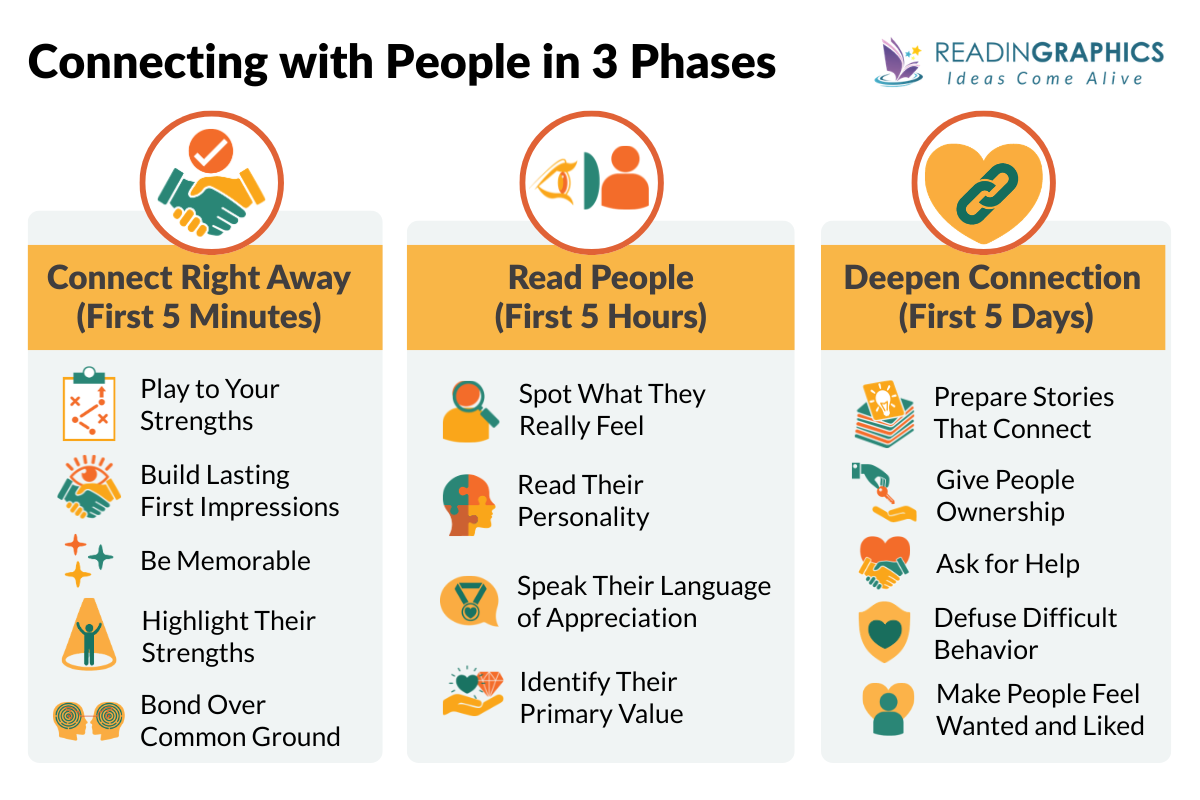
The book organizes its people skills across 3 progressive phases:
- First 5 Minutes: make strong first impressions and become someone people want to talk to.
- First 5 Hours: learn to read and understand the people around you.
- First 5 Days: deepen connections and increase your influence with the people who matter.
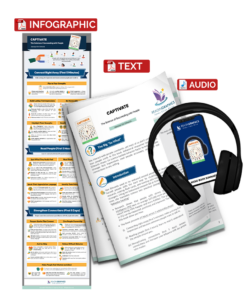
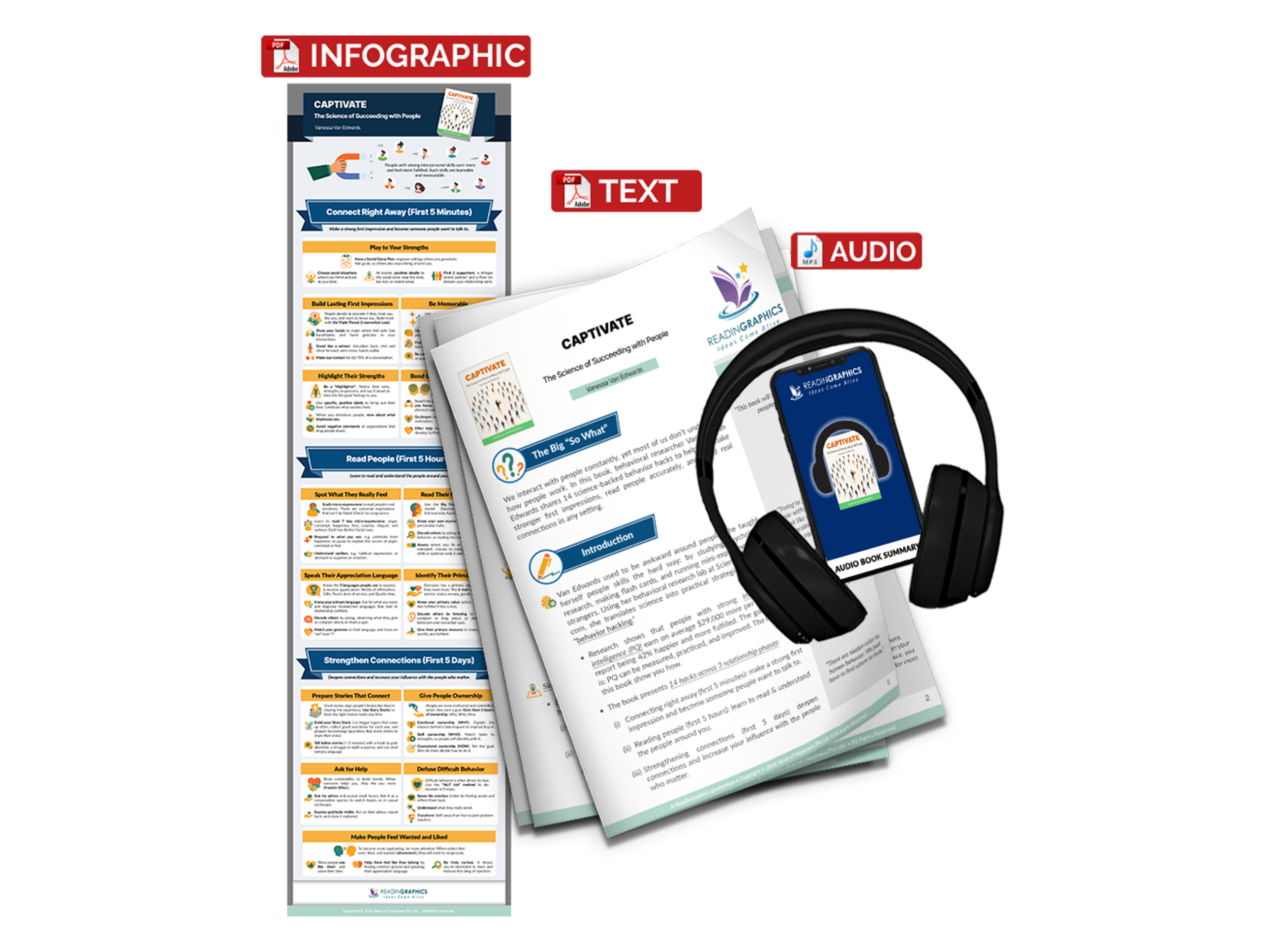
In our complete 21-page book summary bundle (with text, infographic, and audio formats), we break down all 14 of Van Edwards’ people skills with her specific scripts, self-assessments (including a PQ test), and practice exercises for each phase.
Part 1: Connecting with a Strong First Impression
In this first phase, Van Edwards highlights 5 skills that help you connect with people right away.
Play to Your Strengths
Making a strong first impression starts with your Social Game Plan. Instead of forcing yourself into every social situation, focus on choosing the settings, positions, and people where you genuinely feel good, because research shows that real positive feelings are infectious in social interactions.
You can also set yourself up for success at events by identifying 3 distinct areas:
- Start Zone — the entrance and check-in
- Side Zone — the food table or bathroom area
- Social Zone — the bar exit, near the host, or seated areas
Position yourself in the Social Zone rather than the Start Zone or Side Zone. Simple actions like these are how real conversations happen.
Build Lasting First Impressions
Van Edwards teaches how to form positive, lasting impressions using the Triple Threat: 3 nonverbal cues and body language that determine whether people see you as trustworthy, confident, and likable.
Her method lies in using body language like eye contact, showing your hands through hand gestures, and adopting a confident stance. These nonverbal communication cues are subtle, but make a huge difference.
The remaining 3 skills are about making conversations memorable using Conversation Sparks and Hot Buttons (triggers that create visible energy shifts), highlighting people’s strengths to build positive connections, and bonding with others over common ground.
In our full summary, we cover these skills in detail, along with specific conversation scripts, her 3-step name-recall method, concrete tips for gestures and eye contact, and other practical tips you can apply to make your first 5 minutes with someone a memorable one.
Part 2: Reading and Understanding People
Expanding into the first 5 hours of meeting someone, these 4 skills will help you decode people by reading their hidden emotions, identifying their personality, finding their appreciation language, and discovering what drives them.
Spot What They Really Feel
Van Edwards starts with spotting what people really feel through their actions. Often this comes through microexpressions: involuntary, universal facial expressions that reveal someone’s real emotions, even when they’re trying to hide them.
Borrowing from Paul Ekman’s research, she teaches 7 key facial microexpressions (anger, contempt, happiness, fear, surprise, disgust, and sadness), each with distinct facial markers that can’t be faked.
Learning to read these behavioral cues gives you a window into what people actually feel, so you can respond to the emotion behind their words rather than just their surface-level message.
Our complete Captivate summary includes the specific facial cues for each of the 7 micro-expressions, Van Edwards’ response protocol for each emotion, and her tips for reading outliers like facial punctuators and suppressed expressions.
Read Their Personality
Most clashes happen when you communicate from your own preferences rather than theirs. So it’s important to keep someone’s personality in mind.
Most psychologists consider the Big Five personality model, also known as the OCEAN model, to be more accurate than Myers-Briggs, DiSC model, or Enneagram for understanding people’s personality types.
The 5 core traits are openness, conscientiousness, extroversion, agreeableness, and neuroticism. Each person sits somewhere on a spectrum for each trait.
- Openness: your appetite for new ideas and experiences.
- Conscientiousness: how you manage tasks and stay organized.
- Extroversion: where you get your energy.
- Agreeableness: how you handle teamwork and conflict.
- Neuroticism: your sensitivity to stress.
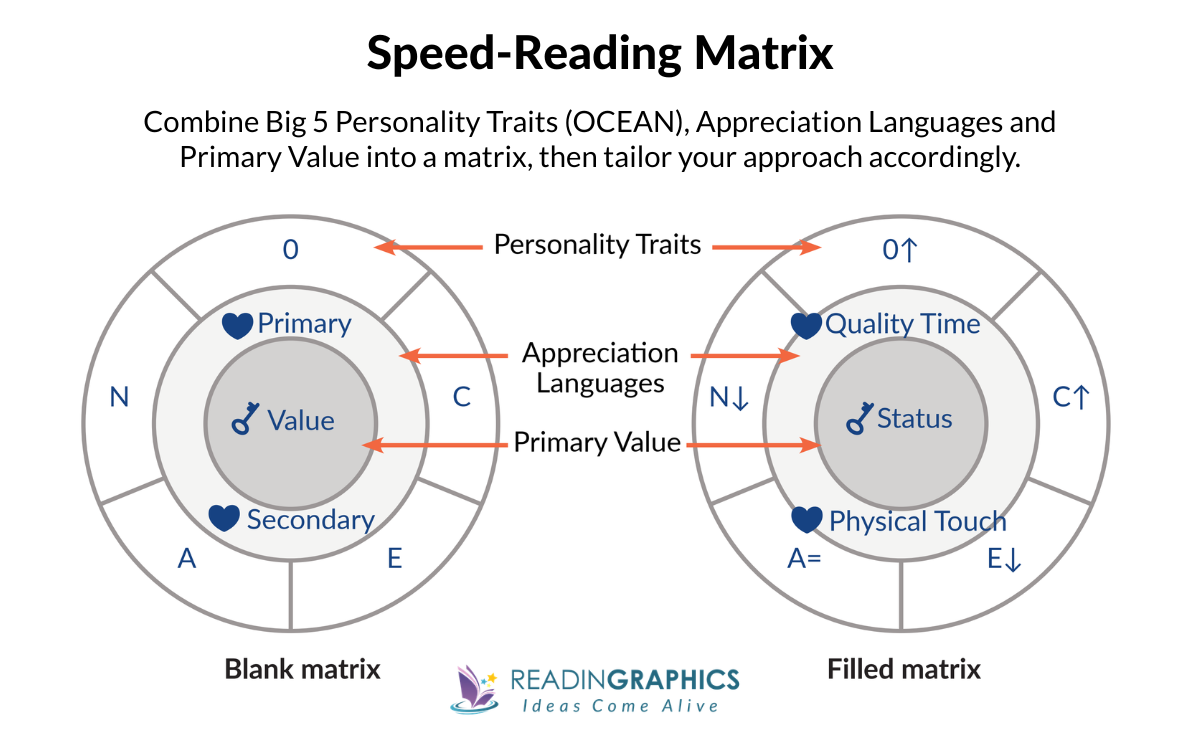
Van Edwards builds on the Big Five personality traits with her Speed-reading system: a method for constructing a Personality Matrix that maps where each person ranks on all 5 traits. Once you know someone’s matrix, you can tailor your communication to their personality in any pitch, request, or conversation.
Speak Their Appreciation Language
Van Edwards also adapts Dr. Gary Chapman’s 5 Appreciation Languages as a core people skill.
This is a direct adaptation of the popular The 5 Love Languages for couples, transforming the love languages (Words of Affirmation, Gifts, Physical Touch, Acts of Service, and Quality Time) into appreciation languages to empower and encourage others.
Captivate also includes an Appreciation Matrix to help you decode how people express and receive appreciation.
Identify Their Primary Value
Finally, Van Edwards identifies 6 primary values that drive everyone’s behavior: love, service, status, money, goods, and information. Each person gravitates toward 1 category above the rest, and understanding someone’s primary value helps you predict their behavior, motivate them, and make them feel valued.
You can decode someone’s primary value by listening to what they complain or brag about, watching their nonverbal reactions, and observing their behavioral patterns.
Our complete summary expands more on these 4 skills, detailing Van Edwards’ method for finding yours and others’ personality framework, speaking other people’s appreciation languages, and decoding their primary values.
Part 3: Strengthening Connections
The last 5 skills help you move from surface-level interactions to real influence with the people who matter.
Prepare Stories That Connect
Stories are the fastest way to build real connections. Van Edwards’ Story Stack system gives you the right stories ready for any conversation. Build your stack around 3 components:
- Trigger topic stories: subjects that come up repeatedly in conversations.
- Sparking stories: your best anecdotes for each topic, the ones that consistently get engagement.
- Boomerang stories: questions you ask after your story to get the other person sharing theirs.
Tell better stories by keeping your storytelling under 3 minutes, opening with a hook to grab attention, and using vivid sensory language to activate the listener’s imagination.
Give People Ownership
People value things that they own or build themselves. To motivate people, give them 3 layers of ownership:
- Emotional ownership (WHY): explain the mission behind the task to build buy-in.
- Skill ownership (WHO): match tasks to strengths using Van Edwards’ Skill Solicitation technique.
- Customized ownership (HOW): set the goal, then let them decide the approach.
Start with what you’re personally passionate about, then build the ownership layers from there.
Van Edwards also includes 3 other skills to help you in your first 5 days: how to build trust by asking for help, defusing difficult behavior, and making people feel wanted and liked. In our complete summary, we cover all 5 skills and expand on specific techniques such as the NUT Job technique for de-escalation and using the Franklin Effect to your advantage.
Getting the Most from Captivate
Ready to build real connections and become someone people genuinely want around? Zoom in on the ideas above and get more detailed insights, examples, and actionable tips from our complete Captivate book summary bundle that includes an infographic, 21-page text summary, and a 24-minute audio summary, so you can learn the key takeaways from Vanessa Van Edwards’ people skills system in the format that suits you best.
Here’s more of what you’ll find in the full summary:
- Conversation Sparks and Hot Buttons: Van Edwards’ specific scripts and questions for making every exchange memorable
- The Highlighter technique: how positive labels bring out the best in people through the Pygmalion Effect, and how the Golem Effect drags them down
- Thread Theory: the 3-category system (people, context, interests) for finding common ground with anyone
- 7 micro-expression response protocols: the specific facial cues for each emotion and what to do when someone’s words and expressions don’t match
- Appreciation Matrix: how to decode someone’s appreciation language and match your gestures to theirs across 3 zones of physical touch
- Story Stack templates: complete trigger topic, sparking story, and boomerang frameworks for any conversation
- NUT Job de-escalation method: the full 3-step process for defusing the 4 fear-driven behavior patterns (rejection, being forgotten, criticism, and losing control)
The book also includes detailed case studies, self-assessments and quizzes, and digital bonus materials with practice exercises. You can purchase the book here or visit scienceofpeople.com for more details.
Captivate has 4.6 stars on Amazon (3,929 reviews).
If you enjoyed this Captivate summary, you might also like:
- How to Talk to Anyone summary covers 92 practical techniques for building rapport and connection in everyday interactions.
- What Every Body Is Saying summary teaches you how to read and interpret nonverbal cues accurately.
- The 5 Languages of Appreciation in the Workplace summary transforms Gary Chapman’s 5 love languages framework into languages for appreciation at work.
- How to Win Friends & Influence People summary shares timeless principles for building goodwill, easing tension, and winning cooperation.
Who Should Read This Book
- Professionals, leaders, and salespeople who want a science-backed system for reading and influencing people in meetings, negotiations, and networking events.
- Anyone who struggles and feels awkward or drained in social situations and wants a practical framework for connecting with confidence.
- Coaches, teachers, and team leads who want to decode what drives the people around them and bring out their best.
Captivate Chapters
Our summaries are reworded and reorganized for clarity and conciseness. Here’s the full chapter listing from Captivate by Vanessa Van Edwards, to give an overview of the original content structure in the book.
See All Chapters (Click to expand)
Introduction
Part I: The First Five Minutes
Chapter 1. Control: How to win the social game
Chapter 2. Capture: How to make a killer first impression
Chapter 3. Spark: How to have dazzling conversations
Chapter 4. Highlight: How to be the most memorable person in the room
Chapter 5. Intrigue: How to be ridiculously likable
Part II: The First Five Hours
Chapter 6. Decode: How to uncover hidden emotions
Chapter 7. Solve: How to crack someone’s personality
Chapter 8. Appreciate: How to get the best from people
Chapter 9. Value: How to get along with anyone
Part III: The First Five Days
Chapter 10. Connect: How to speak so people listen
Chapter 11. Empower: How to lead people
Chapter 12. Reveal: How to build lasting relationships
Chapter 13. Protect: How to deal with difficult people
Chapter 14. Engage: How to turn people on
Captivate: The Science of Succeeding with People [Publication Date: April 25, 2017 / ISBN: 9780399564482 (hardcover), 9780399564505 (e-book)]
About the Author of Captivate
Captivate: The Science of Succeeding with People was written by Vanessa Van Edwards, a behavioral researcher, bestselling author, and Harvard University instructor. She is the founder of Science of People, a human behavior research lab where she conducts original research on communication, body language, and interpersonal skills. She calls this behavior hacking.
Van Edwards has been featured in CNN, BBC, Fast Company, Entrepreneur, and USA Today, and has served corporate clients including Google, Microsoft, Amazon, and Meta.
Captivate Quotes
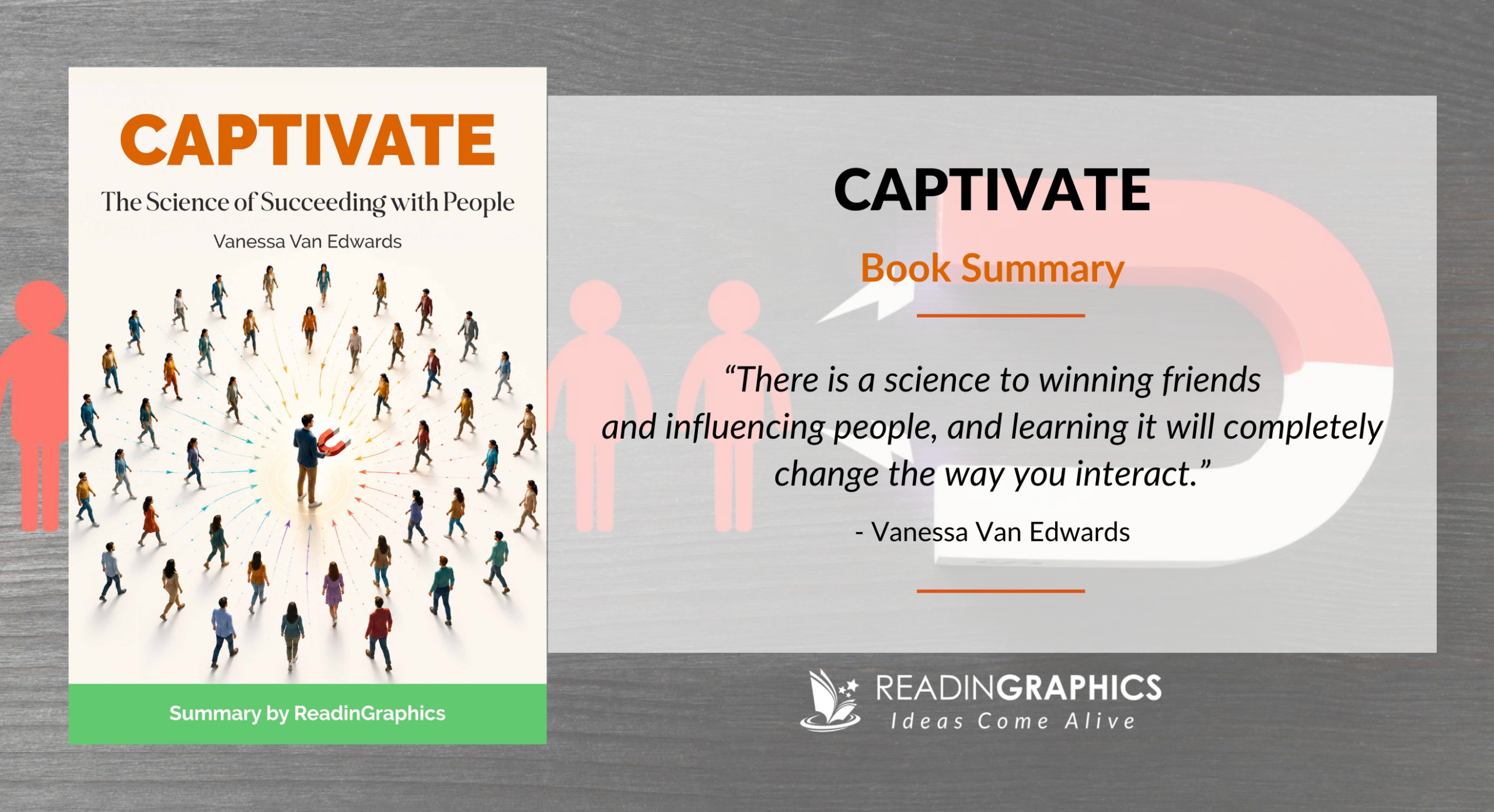
“There is a science to winning friends and influencing people, and learning it will completely change the way you interact.”
“There are hidden rules to human behavior. We just have to find where to look.”
“Appeal to someone by focusing on what they value, not what you value.”
“When we give up control, we gift power.”
“To get people motivated, give them ownership.”
“The more you have in common with someone, the more likable you become. We like people like us.”
“The best conversations aren’t about what you say, they are about what you hear.”
“Being memorable is not about bringing up your high points. It’s about highlighting theirs.”
“Our primary value is at the heart of who we are, the choices we make, and what drives us.”
“The power of our first impression lies not in what we say, but how we say it.”
Frequently Asked Questions
Is Captivate a good book?
What is Captivate about?
What are the key takeaways from Captivate by Vanessa Van Edwards?
Is Vanessa Van Edwards a psychologist?
Which Vanessa Van Edwards book is better, Cues or Captivate?
How can I make a good first impression?
Click here to download the Captivate infographic & summary