Wondering why you struggle to learn? Learning is a process that we all go through almost daily. If you aren’t learning to keep up with the shifting objectives at work, you might be learning to stay up to date with the latest technology or adapt to a new culture. Whatever it may be, using the right learning techniques means you get to pick up new skills quickly. Several books can help you take charge of your personal and professional development, learn quickly, and retain and apply what you learn. Being a book summary service that has reviewed thousands of books, we’ve picked the best books about learning to help you improve your skills in no time.
In essence, this article covers:
- Why do you Struggle with Learning?
- What are good books on Effective Studying or Learning Techniques?
- Best Books about Learning: Bonus Recommendations
- Conclusion
- Frequently Asked Questions
But first, let’s get a deeper understanding of what causes difficulty in learning.
Why Do You Struggle with Learning?
Many learning difficulties come from psychological disturbances, poor learning resources, or environmental factors. Stress, anxiety, low confidence, or past negative experiences can make the brain less open to taking in new information because it’s already overwhelmed. At the same time, environmental issues, like noise, constant interruptions, lack of support, or simply not feeling emotionally settled, make it hard to focus or stay committed. And when the resources you’re using are confusing, outdated, or badly structured, the learning process becomes even more discouraging.

Let’s break this down further:
1. Hard to Find Good Information
The resources you use might be holding you back. Some are too complex, some are filled with unnecessary details, and others lack real substance. Even though experts often create these materials, many courses, articles, and books don’t tackle the challenges that beginners face. Furthermore, many learning materials don’t apply cognitive psychology principles that support how we learn. That’s why it can be tough to learn what you need from them.
2. Learning Feels Disorganized
When everything feels scattered – random videos, bookmarked articles, half-finished courses – it becomes almost impossible to form a clear learning path. You’re absorbing pieces of knowledge without knowing how they connect, and because of that, applying anything in real life becomes difficult. Without applying the science of successful learning, which includes how people connect ideas, your study sessions start to feel random.
3. Hard to Remember Things
It’s really counterproductive when we can’t remember the things we study. Interestingly, it’s absolutely normal for us to forget about 90% of what we read, soon after we’ve read it. This is especially true if we aren’t taking any steps to improve recall, including reading with intention, and connecting new ideas to what we already know.
For a detailed breakdown on how to remember more of what you read, check out our guide on becoming a better reader. Grounded in fundamental neuroscience, it explores several techniques for reading better and tips on multi-modal learning to effectively retain information.
4. Tools Feel Too Complicated
Between constant software updates, new platforms popping up every month, and everyone recommending different tools, the tech side of learning can feel overwhelming. Even simple tools start to feel unnecessarily complicated when the landscape keeps shifting. Instead of helping you learn, the tools themselves become another thing you have to “learn.”
When you understand digital technologies and how they fit into modern learning environments, this can make a big difference.
5. Hard to Stay Motivated
Do you often struggle with getting through learning material? This procrastination or lack of motivation often has underlying causes. For example, we may fear that we just won’t do well learning the new skill, so we avoid even trying. Or other things on our minds get in the way of learning a new skill effectively.
6. Digital Distractions
Being online means being surrounded by constant notifications, messages, and endless content. Even when you genuinely want to focus, your attention is pulled in a hundred directions at once. This makes deep work and deep learning almost impossible because your brain never gets the uninterrupted time it needs to absorb something properly. According to research on cognitive load theory, published in the European Journal of Education and Pedagogy, when your working memory gets crowded, it becomes harder to understand or remember anything.
7. Too Busy and Burned Out
Adults often struggle to find time for learning. With family responsibilities, work, social life, and trying to stay healthy, it can feel overwhelming to add new skills to the mix. When you’re exhausted, even the best study methods won’t work.
8. Not Sure What’s Right for Them
With so many learning paths, courses, and skill options, it can be genuinely hard to know which one fits your goals and your current level. Some resources feel way too simple, and others feel like they’re made for experts. This mismatch makes it unclear where to start, and even harder to stay consistent.
That being said, let’s explore the 7 Best Books about Learning.
What are good books on Effective Studying or Learning Techniques?
Good learning books for adults show you how learning works and provide you with strategies that you can apply immediately. From Peak to Ultralearning, and A Mind for Numbers, we’ve chosen the 7 best books about learning that use cognitive science research to offer techniques created around the way your brain actually works.
7 Best Books About Learning
To Help You Study Smarter and Recall Better


Ultralearning by Scott Young
1-Sentence-summary
Author Scott Young shares techniques that ultra learners use to learn hard skills quickly.
What It Teaches You
The ability to acquire skills and knowledge quickly through honing in on a specific thing that you want to learn, committing to a period of focused learning activities, and pushing through your limits.
Key Takeaways
Ultralearning begins with creating a personalised plan that helps you understand why you’re learning something, what you need to learn, and where you’re likely to get stuck. This avoids the usual one-size-fits-all approach and helps you stay focused. Young encourages deep concentration, practising skills directly in real situations, and putting extra attention on your weakest areas. You strengthen your memory by regularly recalling what you’ve learned and using feedback to improve. Because we forget quickly, you reinforce what you know on purpose, aiming for real understanding rather than surface-level knowledge. The book encourages experimenting, trying new techniques, and pushing yourself slightly beyond your comfort zone so you can refine your skills and move closer to true mastery.
Best For
Anyone wanting to pick up a hard skill quickly, be it learning a new language, programming, or something as difficult as getting a MIT-level education without attending MIT.
Favorite Quote
“If you can master the personal tools to learn new skills quickly and effectively, you can compete more successfully in this new environment.”
Book Review
Scott Young’s tips and tricks are easy to grasp because he shares a lot of detailed examples of his own successful learning projects, and those of people from various fields. The book is a practical read, considering how he shares ideas on how these learning wins can be replicated at home, school, or work. The book is clear and well-written, making it accessible to anyone.
For more author insights, check out our detailed summary of Ultralearning.
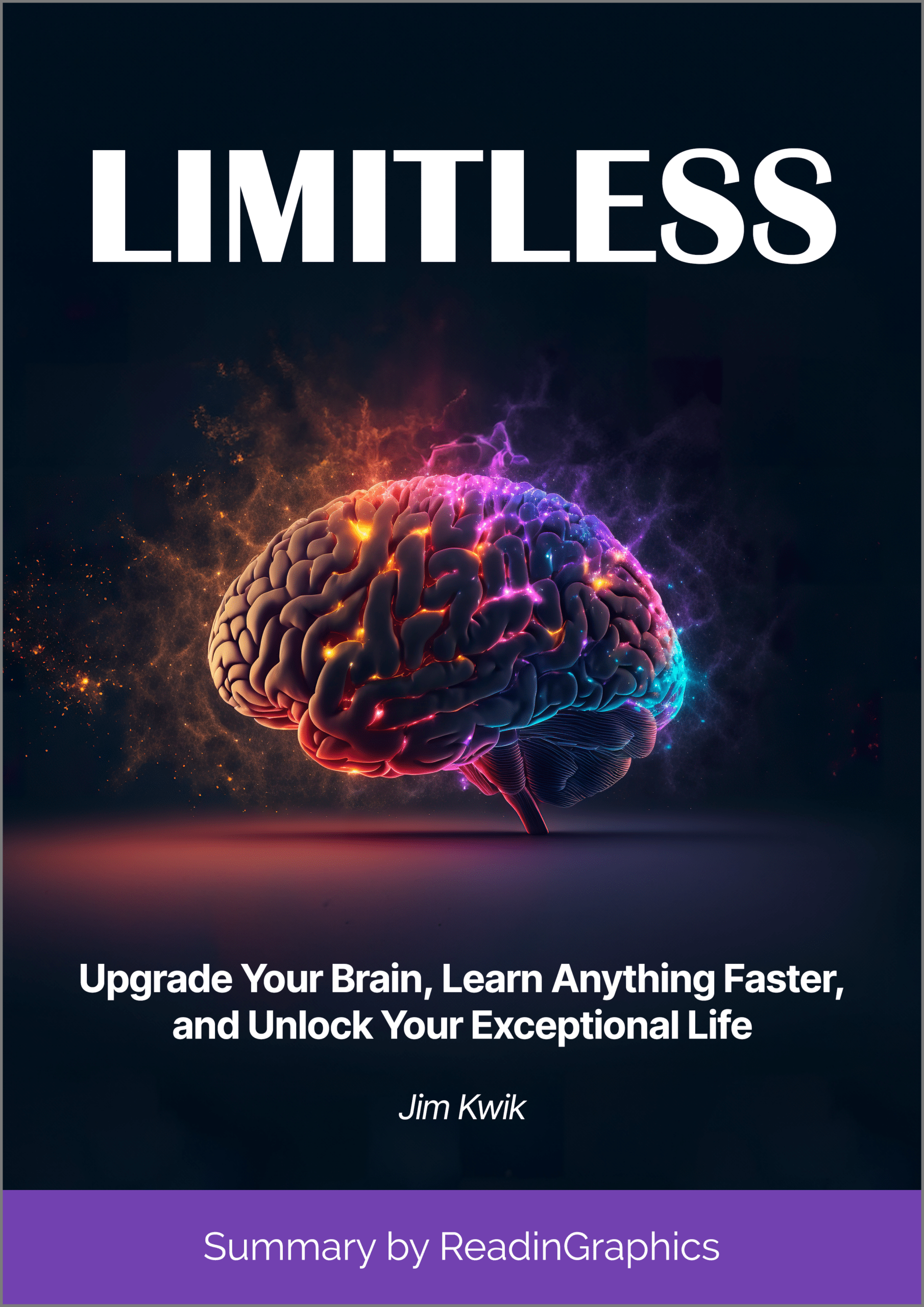
Limitless by Jim Kwik
1-Sentence-summary
Jim Kwik teaches you how to unlock your brain’s full potential by mastering your 3M’s – Mindset, Motivation, and Methods.
What It Teaches You
The book teaches you how your brain truly works and how to reprogram it to learn faster, think better, and perform at a higher level. Kwik shows you how to remove self-limiting beliefs, create sustainable motivation, and use proven learning methods to read faster, remember more, and stay focused.
Key Takeaway
Limitless shows that your potential isn’t fixed. Instead, your brain rewires itself constantly through neuroplasticity. When you address the 3Ms together, you learn more efficiently. You replace limiting beliefs with empowering ones, fuel your actions with clear purpose and strong energy, and use practical tools like spaced repetition, active recall, speed reading, and memory techniques to master information faster.
Best For
Anyone wanting to learn faster, improve focus, upgrade memory, or remove the mental blocks stopping them from reaching their goals.
Favorite Quote
“There are no limitations when you align and apply the right mindset, motivation, and methods.”
Book Review
Jim Kwik blends science, storytelling, and practical frameworks to show that intelligence isn’t something you’re born with, but something you build. The book is clear and encouraging, full of exercises you can start immediately, and grounded in both research and years of real-world coaching.
You can read our detailed summary of Limitless here.
Building a Second Brain by Tiago Forte
1-Sentence Summary
Tiago Forte teaches you how to create a digital “Second Brain” that captures, organizes, and refines your ideas so you can think more clearly and consistently achieve your goals.
What It Teaches You
How to manage information in a structured way so your brain can stop trying to remember everything and instead focus on thinking, creating, and problem-solving. The book shows you how to build a reliable digital system for storing ideas, retrieving them fast, and turning scattered notes into meaningful output.
Key Takeaway
Building a Second Brain shows that productivity is about freeing your mind from holding every detail and instead relying on a trusted external system. By capturing ideas that resonate, organizing them by purpose, distilling them into useful insights, and expressing them through creative output, you create a cycle of learning that compounds over time. The Second Brain makes you more focused, more innovative, and better equipped to tackle complex projects without mental overwhelm.
Best For
Writers, students, knowledge workers, and anyone who wants to improve creativity, productivity, and learning.
Favorite Quote
“A Second Brain enables you to recall everything you might want to remember so you can achieve anything you desire.”
Book Review
Tiago Forte delivers a clear, practical system that anyone can apply immediately, regardless of the tools they use. What makes the book powerful is how he explains complex ideas, like knowledge management, creativity, and information overload, through simple frameworks and relatable examples. The CODE method is actionable and flexible, and the book is full of tips you can implement even before finishing the chapter.
You can read our detailed summary of Building a Second Brain here.
A Mind for Numbers by Barbara Oakley
1-Sentence-summary
Barbara Oakley explains how anyone can learn math and science more effectively by understanding how the brain works and using practical techniques to build deeper, stronger learning habits.
What It Teaches You
The book teaches you how to use your brain’s natural modes of thinking to learn complex topics without feeling overwhelmed. You learn how to switch between focused and diffused thinking, build meaningful “chunks” of knowledge, strengthen long-term memory, and overcome habits like procrastination that block learning progress.
Key Takeaways
Oakley begins by showing that difficulty with math and science usually comes from how we approach learning. She explains the two modes of thinking (focused and diffused), and how toggling between them helps you understand both technical details and big-picture concepts. The book also addresses memory techniques and procrastination. Overall, the book shows that learning math and science is less about raw talent and more about using the right mental tools.
Best For
Students, adults, and anyone wanting to improve how they learn technical subjects like math, science, and engineering.
Favorite Quote
“It’s best to work at math and science in small doses—a little every day…That’s how solid neural structures are built.”
Book Review
This book is practical and encouraging because Oakley mixes scientific research with relatable examples from her own life and from well-known thinkers like Richard Feynman. Her explanations are simple without being shallow, making the techniques feel usable whether you’re learning algebra, programming, or advanced engineering.
The ideas are easy to apply, highly actionable, and backed by clear insights into how the brain forms memories and solves problems. Oakley’s writing style is friendly and motivating, making this a helpful read for anyone who wants to learn faster, reduce frustration, and build confidence in difficult subjects.
For more author insights, check out our detailed summary of A Mind for Numbers.
Make it Stick
1-Sentence-summary
Make It Stick explains why most of us use ineffective learning strategies and presents research-backed techniques that improve retention, understanding, and long-term mastery.
What It Teaches You
The book teaches you how learning truly works inside the brain, and why the most effective techniques often feel slower and more effortful. You learn how memory is formed, why retrieval strengthens learning, and how spacing, variation, and deeper mental models create more durable knowledge.
Key Takeaways
The authors explain that successful learning isn’t about re-reading, highlighting, or cramming; it’s about using scientifically proven strategies that help information stick. Learning happens in three stages: encoding new information, consolidating it into long-term memory by connecting it to what you already know, and retrieving it so the memory traces grow stronger. Techniques like retrieval practice, spaced repetition, interleaving, and variation make learning feel harder but dramatically improve understanding.
Best For
Anyone who wants to replace ineffective habits like rereading and cramming with methods that build long-term understanding and real skill.
Favorite Quote
“Learning that’s easy is like writing in sand, here today and gone tomorrow.”
Book Review
Make It Stick is one of the clearest and most practical books on how learning actually works. The authors blend cognitive psychology, experiments, and real stories to show why some methods fail, and others consistently lead to better outcomes. Although the concepts are research-based, they are explained in a way that anyone can understand and apply immediately.
For more author insights, check out our detailed summary of Make it Stick.
Slow Productivity by Cal Newport
1-Sentence-summary
Cal Newport teaches you how to achieve meaningful, high-quality work by doing fewer things.
What It Teaches You
The book teaches you to replace frantic activity with intentional effort. Newport explains how modern knowledge work rewards visible busyness instead of real results, and shows you how to shift toward a calmer, more thoughtful pace that protects your energy and reduces overwhelm.
Key Takeaway
Slow Productivity is about focusing on fewer important tasks, working at a sustainable pace, and obsessing over quality rather than volume. When you abandon pseudo-productivity and stop trying to look busy, you create space for deep thinking, better decision-making, and long-term accomplishments that are both meaningful and burnout-free.
Best For
Knowledge workers, freelancers, entrepreneurs, students, and anyone overwhelmed by busyness.
Favorite Quote
“To embrace slow productivity…is to reorient your work to be a source of meaning instead of overwhelm, while still maintaining the ability to produce valuable output.”
Book Review
Cal Newport delivers a grounded, humane alternative to modern work culture by combining research, history, and practical strategies. His principles are simple but transformative, helping you break the cycle of overload and replace it with deliberate, thoughtful progress. The book feels refreshing because it doesn’t glorify hustle; instead, it shows you how major achievements often come from patience, depth, and working in alignment with your natural rhythms.
For more author insights, check out our detailed summary of Slow Productivity.
The Art of Learning by Josh Waitzkin
1-Sentence-summary
Josh Waitzkin reveals how world-class performers grow by approaching learning as an inner journey, for example, mastering mindset, resilience, and deliberate practice.
What It Teaches You
The book teaches you how to learn from the inside out by understanding how your mind reacts to pressure, discomfort, mistakes, and uncertainty. Waitzkin shows that mastery comes from training your attention, embracing loss, refining fundamentals, and turning adversity into growth opportunities, whether you’re learning a sport, a creative skill, or navigating high-stakes situations.
Key Takeaway
You become exceptional not by relying on talent, but by learning how to learn: cultivating a growth mindset, leaning into adversity, entering a relaxed state of focused attention, and breaking skills into smaller, deeper fundamentals. Mastery comes from transforming challenges into training opportunities and internalizing your craft until performance feels intuitive and effortless.
Best For
Athletes, entrepreneurs, students, creatives, coaches, and professionals seeking peak performance.
Favorite Quote
“In every discipline, the ability to be clearheaded, present, cool under fire is much of what separates the best from the mediocre.”
Book Review
Waitzkin blends personal stories from chess and martial arts with clear psychological principles, showing how world-class performance is built through presence, resilience, and deep practice. His approach feels personal yet universally applicable, offering simple mental frameworks you can apply to any skill. The book stands out because it focuses on the inner game making it a practical guide to unlocking potential in both competitive environments and everyday life.
You can read our detailed summary of The Art of Learning here.
Best Books about Learning: Bonus Recommendations
Here are two more great books that teach you something about mastering any field and excelling in skills you thought required natural talent to do well.
Mastery by Robert Greene
Greene shows how people can achieve mastery in any field by looking at how both historical and modern experts built their skills. The book’s main idea is that mastery is not a gift but comes from long-term commitment, deep focus, and learning through stages similar to an apprenticeship.
He explains the process in clear steps: finding your calling, practicing with discipline to build skill, and finally developing intuition after years of experience. Even though the book covers a lot of stories and research, the writing is easy to follow, and the examples help make the ideas practical and relatable.
You can read our detailed summary of Mastery here.
Peak by Anders Ericsson
Ericsson uses science to show how applying ‘deliberate practice’ can help you outperform natural talent and achieve better results. Deliberate practice is purposeful study habits like defining specific goals, deep focusing, pushing yourself out of comfort zones, and receiving feedback. He does a thorough job at breaking down these habits, helping you apply deliberate practice in your life.
Despite being science-based, the writing style is simple, and the ideas, quickly digestible. The book’s main ideas are also easy to understand, considering he includes various anecdotes to show how experts have used deliberate practice to achieve high performance.
Conclusion
Learning will always be part of our lives, so it’s best to know how to do it right so we can gain skills quickly and retain them for a long time. The books in this article each offer specific strategies for learning fast and effectively. From Peaks, which walks you through deep, purposeful practice, to Make it Stick, which gives you strategies to improve intention, and to Ultralearning, which helps you create personalised learning plans that suit your needs.
These, along with other best books about effective learning featured in this guide, will help you take a holistic approach to improving your learning, ensuring that no aspect you’re struggling with goes unaddressed. That said, why not pick a detailed book summary right away, and get to Learning!
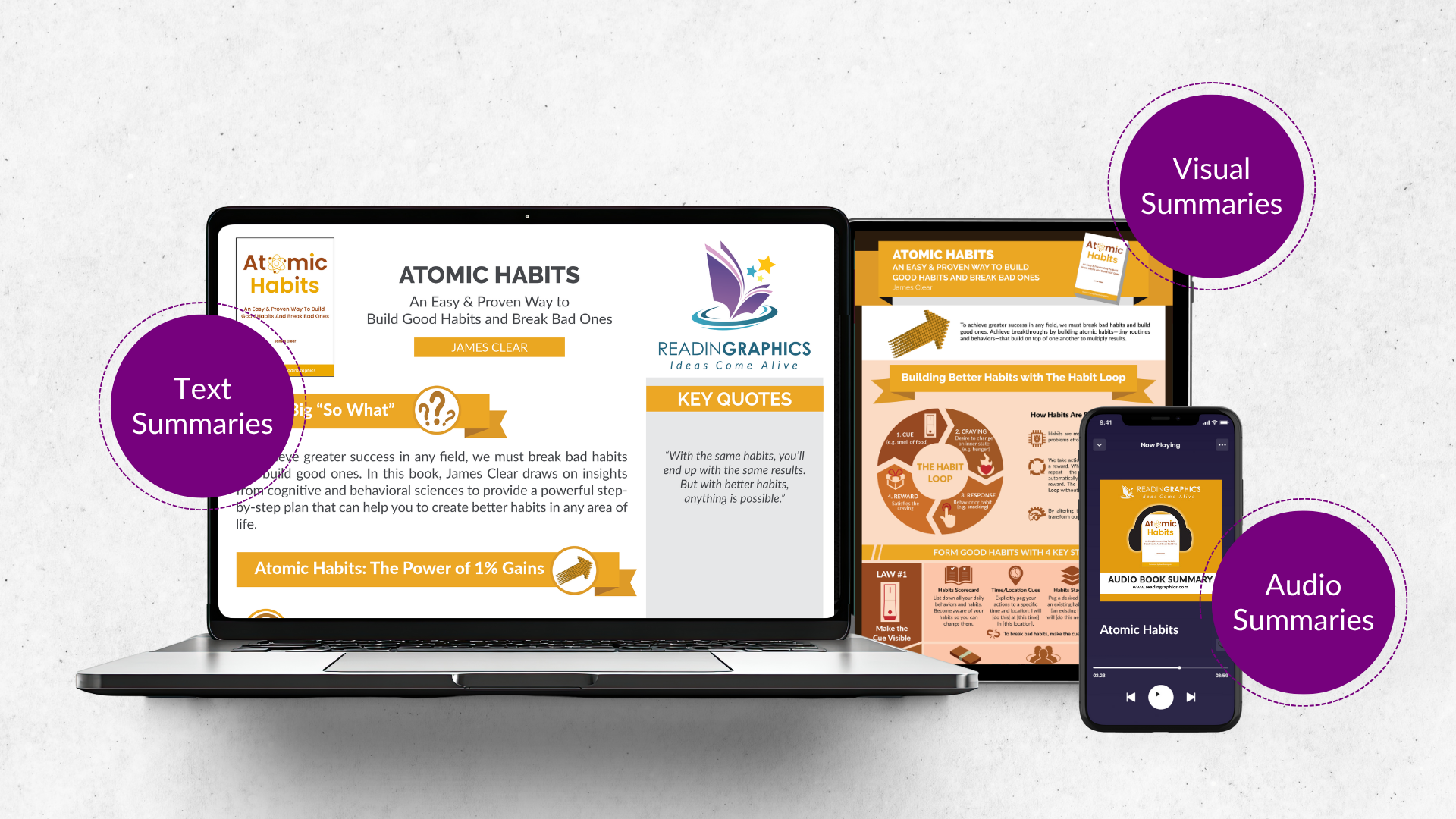
Ready to make this happen? Explore Readingraphics’ text, visual, and audio summaries of the best books on business growth and development. Take the first step today—Subscribe to access all these great titles AND more than 300 other best-selling book summaries to grow your thriving business!

Frequently Asked Questions
What are the best books to help me learn how to learn?
Books like Make It Stick, Ultralearning, and Peak are great starting points because they break down how learning actually works. They give you practical tools you can use immediately, without feeling academic or overwhelming.
Which books teach memory improvement and retention?
The Memory Book, Unlimited Memory, and Building a Second Brain explain memory techniques in an easy, accessible way. They show you how to use simple mental frameworks to store and recall information more reliably.
What are the top books on learning faster and more effectively?
Ultralearning and Limitless focus on speeding up your learning through smarter strategies, not shortcuts. They’re easy to digest and packed with examples that show you how to apply each idea in real life.
What are the best study-skills books for students / lifelong learners?
Make It Stick and A Mind for Numbers are excellent because they translate cognitive science into practical study habits. They help you avoid common mistakes and build routines that actually make learning stick long-term.
What are the best books to read to educate yourself?
Books like Ultralearning, The Art of Learning, and Atomic Habits give you a broad understanding of how to think, learn, and solve problems. They’re great if you want to build a well-rounded base of knowledge without feeling lost.
What books help you design a smarter learning plan or roadmap?
Ultralearning and The First 20 Hours are great for building a learning roadmap because they show you how to break skills down and structure your practice. They help you learn more intentionally, instead of wasting time on the wrong things.