





Cart is empty
Welcome back: here are the tools and reading path for your situation
People keep misunderstanding what you mean, and you don't know how to change it
Communication breakdowns have different root causes. Each scenario below has one framework you can try this week.
1 tool you can try this week
The Evaluating Scale
From: The Culture Map, Erin Meyer
You gave honest feedback but they took offense. Meyer maps 8 dimensions where cultures differ. The one that causes the most damage at work is Evaluating: how directly you deliver negative feedback.
Some cultures like Netherlands, Israel, or Germany upgrade their criticism ("absolutely," "totally") and give it publicly. Others like Japan, Thailand, or the UK downgrade criticism ("sort of," "a little") and deliver it privately. The US falls in between: explicit in general communication, but indirect with negative feedback. When you're on the direct side and your colleague is on the indirect side, the same honest sentence registers as rudeness.
Before your next feedback conversation, ask 1 question: am I more direct or more indirect than this person? If you're more direct, adjust by 1 step. Soften a single word. Move the conversation to a private setting. Or share positive context first. Meyer's rule: don't try to fully match their style, because you'll likely overshoot without their cultural instincts. Just move 1 step in their direction.
Try placing yourself and 1 colleague on the Evaluating scale this week. You can thank us later.
See the full framework in The Culture Map →
Some cultures like Netherlands, Israel, or Germany upgrade their criticism ("absolutely," "totally") and give it publicly. Others like Japan, Thailand, or the UK downgrade criticism ("sort of," "a little") and deliver it privately. The US falls in between: explicit in general communication, but indirect with negative feedback. When you're on the direct side and your colleague is on the indirect side, the same honest sentence registers as rudeness.
Before your next feedback conversation, ask 1 question: am I more direct or more indirect than this person? If you're more direct, adjust by 1 step. Soften a single word. Move the conversation to a private setting. Or share positive context first. Meyer's rule: don't try to fully match their style, because you'll likely overshoot without their cultural instincts. Just move 1 step in their direction.
Try placing yourself and 1 colleague on the Evaluating scale this week. You can thank us later.
See the full framework in The Culture Map →
1 tool you can try this week
The Communicating Scale
From: The Culture Map, Erin Meyer
In low-context cultures (US, Australia, Germany), you say what you mean and it's received at face value. In high-context cultures (Japan, Korea, much of Southeast Asia), meaning lives in tone, context, and what's left unsaid. When a high-context colleague says "that might be difficult," they may be saying no. If you hear "maybe," you've just misunderstood their response.
The fix is simple: change how you ask. People in high-context cultures seldom say "no" directly. So, replace closed questions with open-ended ones. Instead of "Can you do this by Friday?" ask "How difficult would it be to get this done by Friday?" to invite honest information. After they respond, pause before you speak again. The silence signals you're listening and gives them space to go beyond their first, polite answer.
And if you're the one others call too vague or indirect, do the reverse: state your position explicitly, and put key agreements in writing.
Try 1 open-ended question instead of a closed one this week. You can thank us later.
See the full framework in The Culture Map →
The fix is simple: change how you ask. People in high-context cultures seldom say "no" directly. So, replace closed questions with open-ended ones. Instead of "Can you do this by Friday?" ask "How difficult would it be to get this done by Friday?" to invite honest information. After they respond, pause before you speak again. The silence signals you're listening and gives them space to go beyond their first, polite answer.
And if you're the one others call too vague or indirect, do the reverse: state your position explicitly, and put key agreements in writing.
Try 1 open-ended question instead of a closed one this week. You can thank us later.
See the full framework in The Culture Map →
1 tool you can try this week
The 4 Behavior Colors
From: Surrounded by Idiots, Thomas Erikson
You keep clashing with the same person. You've tried adjusting but nothing sticks. Erikson identifies 4 behavior types, each with a color: Red (dominant, decisive, direct), Yellow (optimistic, talkative, spontaneous), Green (calm, patient, avoids conflict), and Blue (analytical, detail-oriented, methodical). Most people have 2 dominant colors.
Everything you say is filtered through the other person's frames of reference and perceptions. A Red needs you to get to the point. A Green needs patience and no surprises. Treating a Red like a Green makes them impatient. Treating a Green like a Red makes them shut down.
Think of the person you're struggling with. Which 1 or 2 colors fit? Red: cut the small talk, lead with results. Yellow: bring energy, skip the spreadsheet. Green: give them time, avoid sudden changes. Blue: come prepared with facts and specific numbers.
Try identifying and speaking to that person's colors this week. You can thank us later.
See the full framework in Surrounded by Idiots →
Everything you say is filtered through the other person's frames of reference and perceptions. A Red needs you to get to the point. A Green needs patience and no surprises. Treating a Red like a Green makes them impatient. Treating a Green like a Red makes them shut down.
Think of the person you're struggling with. Which 1 or 2 colors fit? Red: cut the small talk, lead with results. Yellow: bring energy, skip the spreadsheet. Green: give them time, avoid sudden changes. Blue: come prepared with facts and specific numbers.
Try identifying and speaking to that person's colors this week. You can thank us later.
See the full framework in Surrounded by Idiots →
1 tool you can try this week
The Illuminator Test
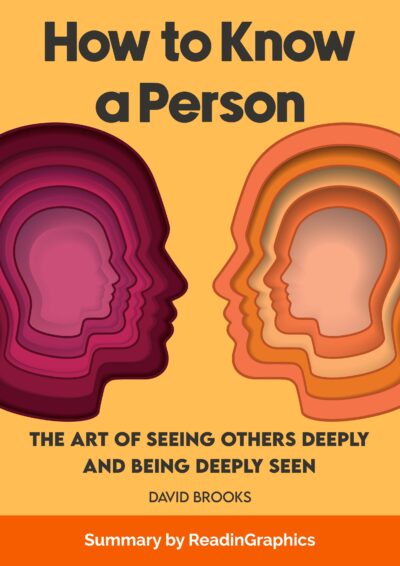
From: How to Know a Person, David Brooks
When communication keeps going wrong with someone, the natural instinct is to diagnose them: their culture, their personality, their stubbornness. Brooks says start with yourself. Everyone operates in 2 modes. Diminishers stereotype, tune out, and make others feel small. Illuminators stay curious and make others feel understood.
The Diminisher trap that creates the most friction is naive realism: assuming your view of reality is the objective one and everyone sees the world the way you do. But different people experience the same situation differently through their own mental models and filters.
The shift starts with 1 move. In your next conversation with this person, say: "Help me understand. What am I missing here?" Then stop talking. Listen without planning your response. When they finish, say what you heard back to them in your own words and check if you got it right. You're not conceding the point. You're finding out what they see that you don't.
Try the question in 1 conversation this week. You can thank us later.
See the full framework in How to Know a Person →
The Diminisher trap that creates the most friction is naive realism: assuming your view of reality is the objective one and everyone sees the world the way you do. But different people experience the same situation differently through their own mental models and filters.
The shift starts with 1 move. In your next conversation with this person, say: "Help me understand. What am I missing here?" Then stop talking. Listen without planning your response. When they finish, say what you heard back to them in your own words and check if you got it right. You're not conceding the point. You're finding out what they see that you don't.
Try the question in 1 conversation this week. You can thank us later.
See the full framework in How to Know a Person →
3 recommended books for communicating across cultures and styles
There are several layers to your challenge and situation. These 3 books cover it from different angles, with different tools that reinforce one another. Read them in order, or jump straight to what resonates most with you.
Explore close to 400 books like the ones above
The tools and recommended books on this page are a few out of close to 400 handpicked titles in our library. Every summary comes with a structural infographic that maps the whole book at a glance, a detailed text summary with the steps and details you need to apply the ideas, and an audio version you can listen to anywhere.
See subscription plans →